
File dust - silent but powerful
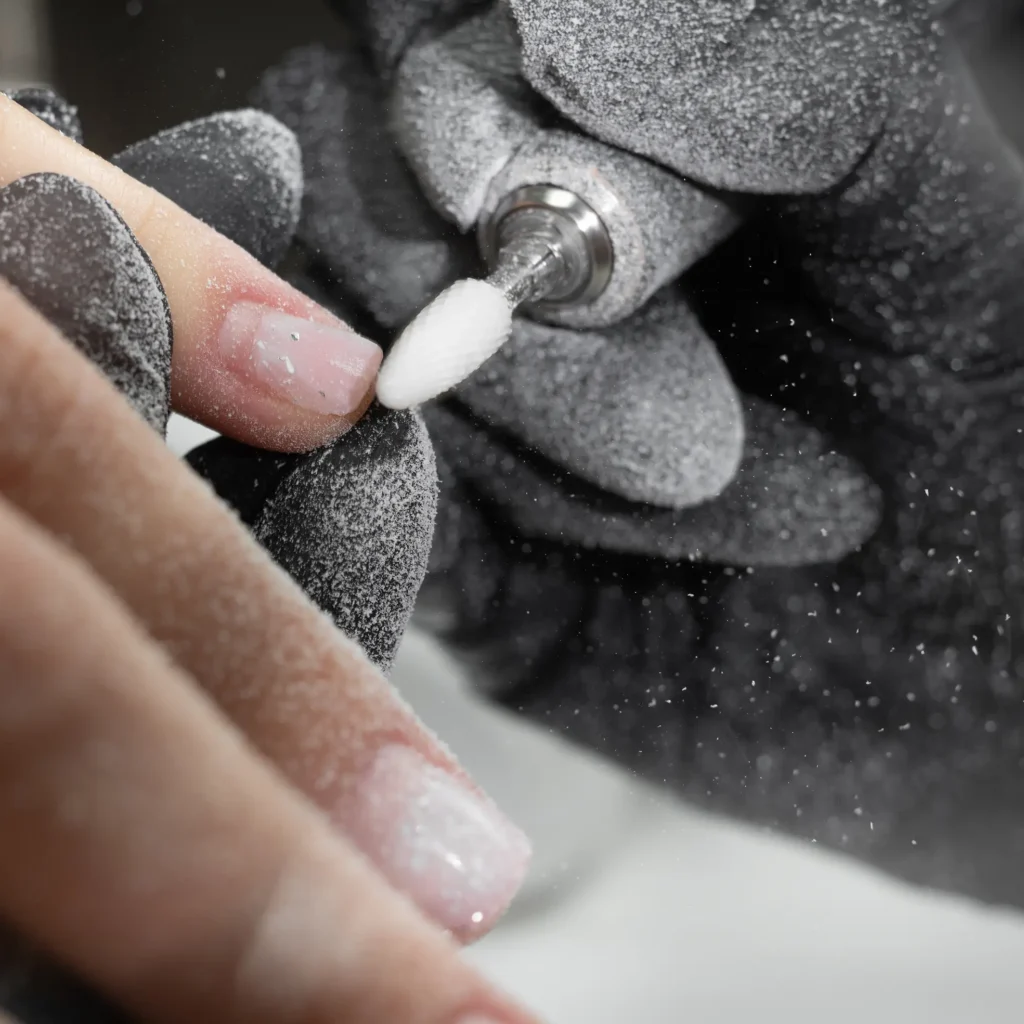
Anyone who works in a studio every day knows it all too well: the invisible companion of every modeling session—file dust. It is fine, almost weightless, and yet omnipresent. While we concentrate on modeling, shaping, or finishing, millions of tiny particles dance through the air. They are “silent but powerful”—because their effects on health, indoor climate, and equipment hygiene should not be underestimated.
WHAT FILE DUST REALLY IS
File dust is produced during any type of nail modeling—whether gel, acrylic, acrylic gel, or natural nails. The particles consist of a mixture of polymer, skin flakes, keratin, pigments, or glitter. Particularly critical is what is known as microdust—tiny particles measuring less than five micrometers.
While coarse dust quickly sinks to the ground, this micro-dust remains in the air for hours—invisible, but constantly inhaled. It can accumulate in the lungs, irritate the respiratory tract, and promote allergies or intolerances in the long term. Those who work in the studio on a daily basis are particularly at risk here, as the exposure accumulates over years.
FOCUS ON HEALTH - WHY RESPIRATORY PROTECTION ALONE IS NOT ENOUGH
Many nail designers rely on respiratory masks—an important step, but not a permanent solution. Masks protect the wearer, but not the room or the customer. Filing dust settles on work surfaces, equipment, and UV lamps. This not only poses hygiene risks, but also increases dust levels throughout the room.
Therefore, genuine prevention begins with technology and indoor air circulation—not with masks.
DUST EXTRACTION – THE INVISIBLE HEART OF A HEALTHY STUDIO
Professional dust extraction is now standard practice rather than a luxury. But not all extraction systems are the same. The decisive factors are how finely the dust is filtered and where it is collected.
Important criteria for effective systems:
- Suction power and air flow: At least 350 m³/h, so that dust is captured directly at the source.
- Filter quality: HEPA or ULPA filters (H13 or higher) filter even the finest particles from the air.
- Positioning: Under-table systems with perforated work surfaces are ergonomic, quiet, and highly efficient.
- Filter maintenance: Regular replacement or cleaning is essential—this is the only way to maintain consistent performance.
High-quality extraction systems can reduce fine dust pollution by up to 90%—actively protecting the health of employees and customers.
SUSTAINABLE REDUCTION STARTS WITH THE MATERIAL
In addition to technique and working methods, the material used also plays a decisive role. Modern product developments have long been aimed at reducing filing to a minimum—and with impressive success.
Examples include:
- No File Builder Gels: These innovative gels flow in a controlled manner, cure smoothly, and require minimal reworking. This not only saves time but also drastically reduces filing dust.
- Builder in a bottle: These systems combine building and sealing in one—ideal for natural nail strengthening and quick refills. Thanks to their self-leveling consistency, the surface is almost perfect after curing—often, gentle buffing is sufficient instead of filing.
- Modern modeling gels with a honey effect: these gels smooth themselves out without running, minimizing the need for intensive shape corrections.
TECHNIQUE MEETS AWARENESS
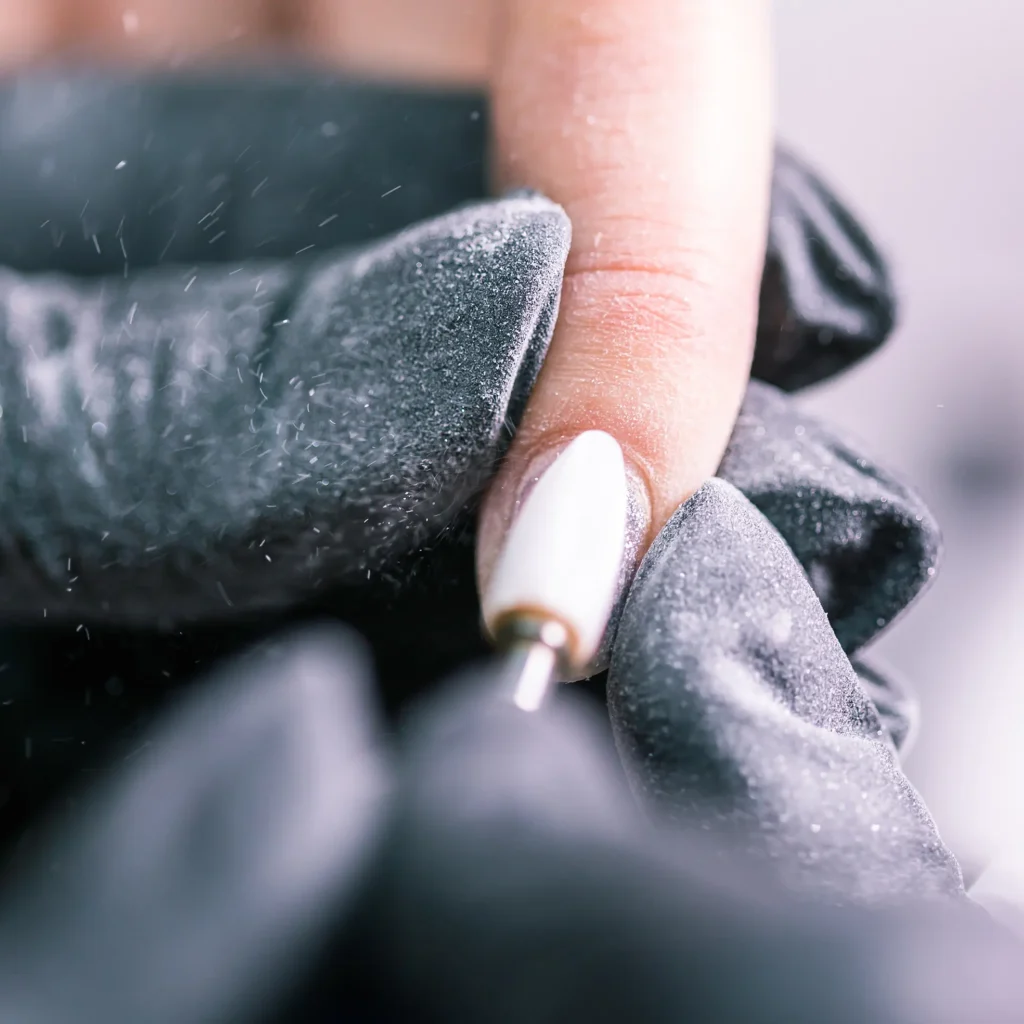
The filing technique itself also influences how much dust is produced. Precise modeling and targeted application of material prevents unnecessary removal. A well-trained filing technique—combined with high-quality files and bits—generates less friction, less heat, and therefore less microdust.
In addition, the following may be helpful:
- Wet cleaning of the work surface: prevents dust from being stirred up again.
- Luftreiniger mit HEPA-Filter: als zusätzliche Maßnahme für Studios mit mehreren Arbeitsplätzen.
- Regular air measurements: e.g., with fine dust or CO₂ measuring devices to visualize indoor air quality.
MICRODUST – THE INVISIBLE DANGER
Particles smaller than 2.5 µm (PM2.5) are considered particularly dangerous because they penetrate deep into the lungs. They do not cause immediate symptoms, but can promote breathing difficulties or intolerances in the long term. Typical warning signs in everyday studio life are headaches, dry mucous membranes, or fatigue at the end of a working day—indications that the air quality should be checked.
CONCLUSION – SILENT BUT EFFECTIVE
File dust is invisible—but its effects are powerful. Anyone who wants to work healthily and successfully in the long term should pay attention to it. Modern extraction technology, intelligent product selection, and conscious working methods together provide the most sustainable protection.
Because true strength is not demonstrated by volume or speed – but by responsibility.
For yourself, for the team, and for the health of everyone who works in our studios every day.